

Districts create a cohesive system that focuses on increasing both academic and behavioral outcomes to equitably support the varying needs of all students.
Multi-Tiered System of Support
DCI-MTSS integrates high quality instruction, together with literacy and behavior teaching and learning practices into a framework that supports the DESE priority of improving literacy outcomes for all students. There is a strong relationship between academic achievement and behavioral outcomes for students. Providing academic supports can improve student behaviors and providing behavioral supports can improve academic outcomes (McIntosh & Goodman, 2016). DCI-MTSS is designed to support districts as they adopt and implement a continuum of evidence-based practices to create the necessary conditions to meet the needs of all students. Building on the effective approaches currently used in Missouri schools, the DCI-MTSS approach supports districts to integrate high-quality instruction with academic and behavior supports.
Essential Functions
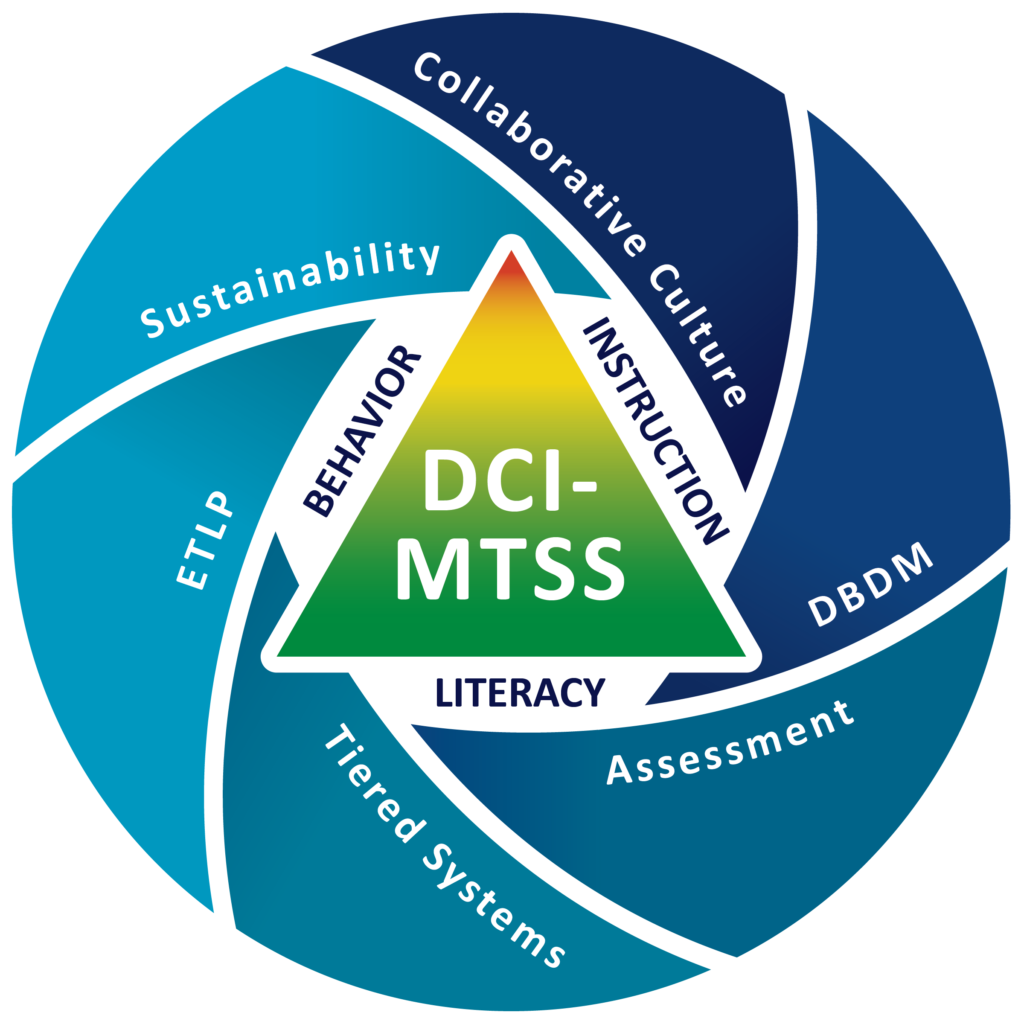
Six essential functions have been identified as important for district leadership teams when implementing DCI-MTSS.
- District leaders maintain a collaborative culture and climate to build capacity for an outcome-driven approach to school improvement.
- District leaders maintain an assessment system designed to support educational teams in making informed instructional and programmatic decisions to support students.
- District leaders engage in cycles of data-based decision making to meet the needs of all students.
- District leaders maintain a tiered system of supports that provides efficient, effective, and equitable allocation of resources to support all students.
- District leaders select and align effective teaching and learning practices to increase the probability that instruction, interventions, and supports meet the needs of all students.
- District leaders provide staff with ongoing support to ensure the integration and sustainability of their continuous improvement efforts.


